Od međuratnog do poslijeratnog SarajevaThe interwar years and their aftermath
Evropa u socijalizmuThe Evropa under socialism
1945–1992
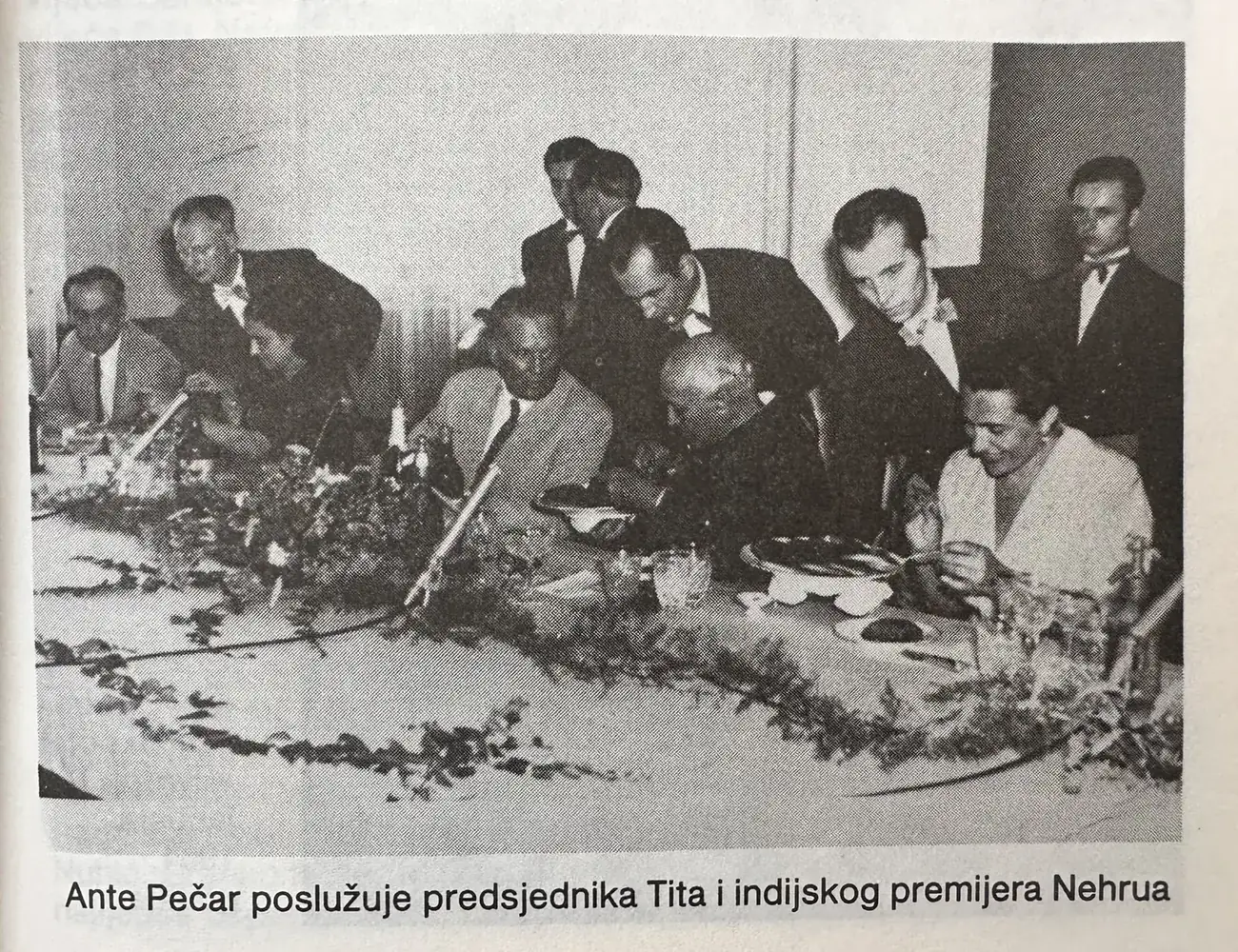
Ante Pečar poslužuje predsjednika Tita i indijskog premijera NehruaAnte Pečar serves President Tito and Indian Prime Minister Nehru
Promijenili su se vlasnik hotela, naziv preduzeća i izgled dijela fasade. Ostale su Bečka kafana, tufahije i Zlatna knjiga.The hotel changed hands, the company changed its name and part of the façade was altered. The Viennese Café, the tufahije (poached apples filled with walnuts) and the Golden Book stayed the same.
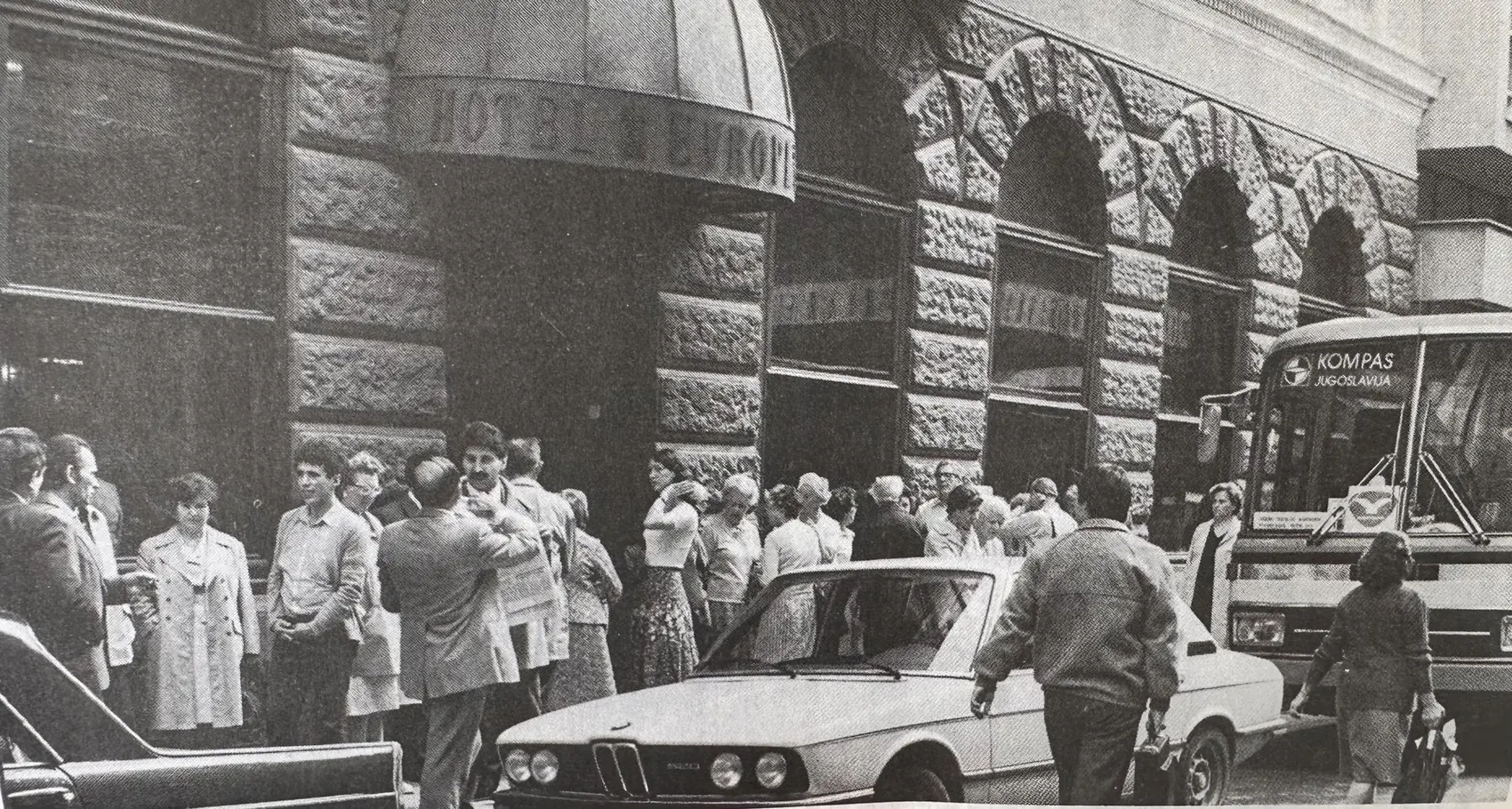
Poslije 1945. nove vlasti nacionalizirale su hotel zajedno s ostalom imovinom porodice Jeftanović. Hotelom su otad upravljala društvena preduzeća, među njima i HTP Evropa. Na istočnoj strani dograđeno je moderno krilo. Hotel je zadržao ime, a Sarajlije su i dalje govorile „idemo u Evropu“.
After 1945 the new authorities nationalised the hotel along with the rest of the Jeftanović family’s property. From then on the house was run by socially owned enterprises, among them HTP Evropa, and a new wing in the contemporary style of the day was added on the east side. The name stayed the same, and so did the habit: Sarajevans still said “let’s go to the Evropa”.
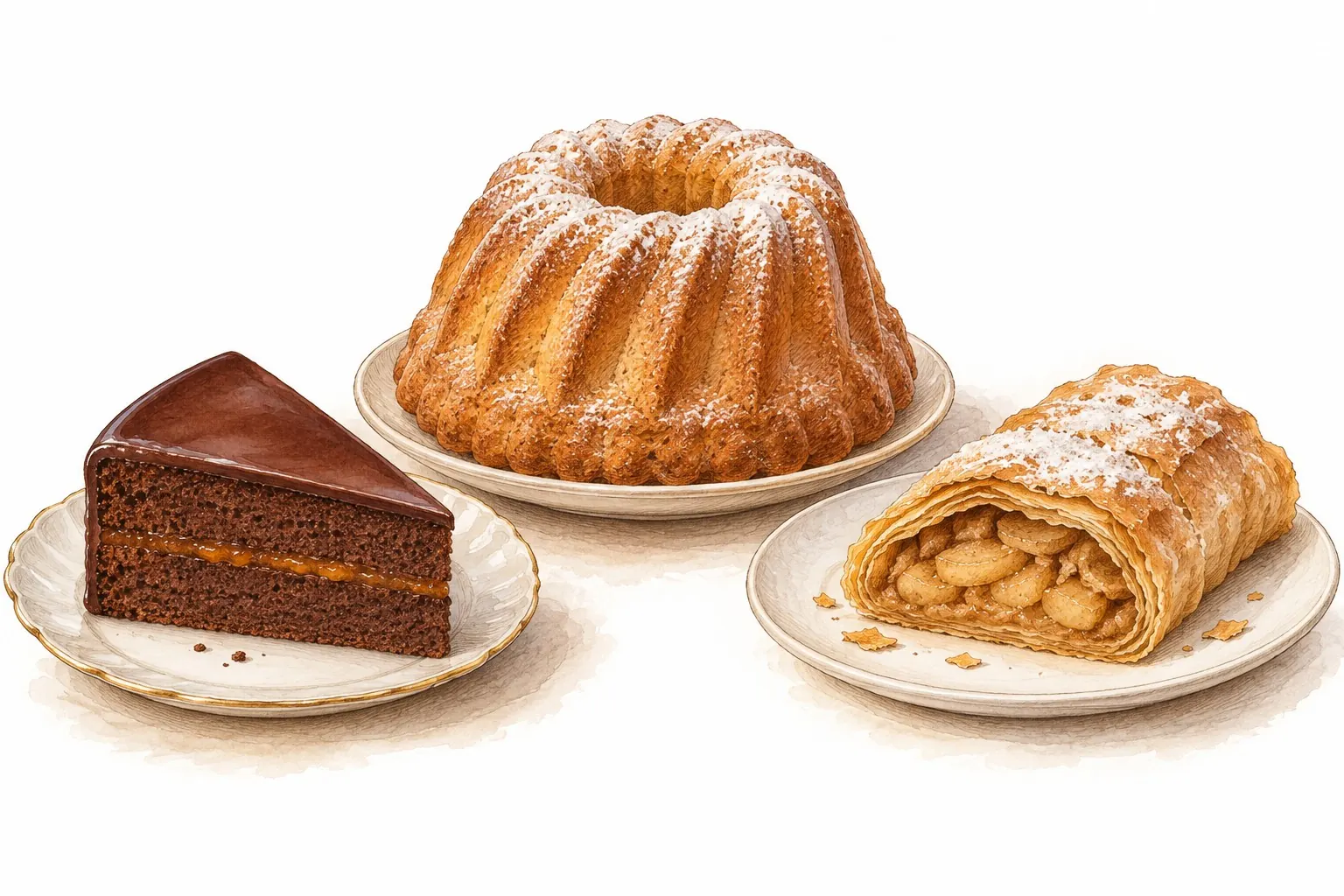
Bečka kafana postala je, kako ju je opisao jedan pisac, mjesto susreta sarajevskih intelektualaca. Za njenim stolovima okupljali su se filozofi, novinari, pisci i drugi ugledni građani, a na stalcima su visili Oslobođenje i Večernje novine. Pita od jabuka, kuglof i Sacherova torta čuvali su u doba socijalizma tradiciju bečkih kafana. U Plavom restoranu mladi parovi plesali su uz klavir i starogradske pjesme, a prema hotelskoj hronici, 1974. godine otvoren je Plavi podrum, koji je ubrzo postao najekskluzivniji noćni klub u gradu.
The Viennese Café became, as one writer would describe it, a kind of intellectual agora: Sarajevo’s notables, philosophers, journalists and writers met at their regular tables, and Oslobođenje and Večernje novine hung on the newspaper racks. Over apple strudel, Gugelhupf and Sachertorte an old Viennese culture was kept alive amid the greyness of socialist hotel-keeping. In the Blue Restaurant young couples danced to the piano and old Sarajevo songs, and, according to the hotel chronicle, in 1974 the Blue Cellar night club opened and soon became the most exclusive night spot in town.
„Central je bio samo prenoćište, dok je Evropa bila hotel, i mnogo više od hotela.“
“The Central was only a place to sleep, while the Evropa was a hotel, and much more than a hotel.”
Miljenko Jergović, „Evropa i Central, legenda o dva hotela“, 2022.
Zlatna knjigaThe Golden Book
Prema hotelskoj hronici, Josip Broz Tito prvi se put upisao u Zlatnu knjigu 5. oktobra 1954. Dolazio je s Edvardom Kardeljom i Mošom Pijadom, a kuhari Evrope pamtili su njegova omiljena jela: grah, uštipke, tufahije i palačinke. Indijski premijer Džavaharlal Nehru obišao je Sarajevo u ljeto 1955. godine tokom uzvratne posjete Jugoslaviji. Fotografija iz hotelske zbirke čuva trenutak u kojem konobar Ante Pečar poslužuje dvojicu državnika. Predaja kaže i da je Ivo Andrić rado odsjedao u sobi 701, s pogledom na Baščaršiju i Trebević.
According to the hotel chronicle, Josip Broz Tito first signed the Golden Book on 5 October 1954. He came with Edvard Kardelj and Moša Pijade, and the Evropa’s cooks remembered what he liked: beans, fritters, tufahije and pancakes. The Indian prime minister Jawaharlal Nehru toured Sarajevo in the summer of 1955, during his return visit to Yugoslavia, and a photograph in the house archive captures the waiter Ante Pečar serving the two statesmen. Tradition also has it that Ivo Andrić liked to stay in room 701, with its view over Baščaršija and Mount Trebević.
Novo kriloA new wing
Poslije Drugog svjetskog rata hotelu je s istočne strane dograđeno moderno krilo, koje, kako je zapisao pjesnik Mile Stojić, „nije bitno narušilo strukturu stare zgrade“. Ljetna bašta prostirala se na mjestu Tašlihana. Evropa je neko vrijeme pripadala kategoriji A, a susjedni Central kategoriji B. Prema hotelskoj hronici, unutrašnjost Evrope potpuno je obnovljena 1978. godine.
After the Second World War a modern wing was added on the east side, which, as the poet Mile Stojić wrote, “did not substantially disturb the structure of the old building”. The summer garden spread over the site of the Tašlihan. For a time the Evropa was classed as an A-category hotel, while the neighbouring Central was B-category, and according to the hotel chronicle the interior was fully renovated in 1978.
Premijere i potpisiPremieres and signatures
Prema zapisu koji prenosi portal Palelive, Ivo Andrić je 1972. godine u knjigu utisaka napisao: „Zahvaljujem ovoj kući u kojoj sam se uvek dobro osećao.“
In 1972, according to an entry quoted by the Palelive portal, Ivo Andrić wrote in the guest book: “I thank this house, in which I always felt at home.”
U Bečkoj kafani novine su stajale na stalcima od trske. Na tapetama su bili motivi Schönbrunna i secesije, a na tacnama su stizali štrudla od jabuka, kuglof i Sacherova torta. Mnogi je pamte i po najboljem kapučinu u gradu.
The Viennese Café had cane newspaper holders and wallpaper with Schönbrunn and Secession motifs, and apple strudel, Gugelhupf and Sachertorte arrived on its trays. It was a café that, as people remember, also served the best cappuccino in town.
Tabla VIPlate VI
Slastice Bečke kafaneSweet specialities of the Viennese Café
Večeri premijeraPremiere nights
Krajem novembra 1969. Evropa je bila središte zbivanja povodom premijere filma Bitka na Neretvi, prikazanog 29. novembra, na Dan Republike, u novoj dvorani Skenderija. Prema reportaži časopisa Start iz novembra 1969. godine, u Sarajevo su stigle zvijezde filma: Yul Brynner, Orson Welles, Sergej Bondarčuk, Bata Živojinović, Ljubiša Samardžić, Sylva Koscina i Milena Dravić, kao i Tito i Jovanka Broz, producent Carlo Ponti i Ira von Fürstenberg. Nakon projekcije u Evropi je priređena večera, a grad je bio pod dubokim snijegom. Tri godine kasnije, 12. aprila 1972. godine, u hotelu je za zvanice priređena večera nakon premijere filma Valter brani Sarajevo.
In late November 1969 the Evropa was at the heart of the events around the premiere of The Battle of Neretva, screened on 29 November, Republic Day, in the new Skenderija hall. According to a report in Start magazine from November 1969, the film’s stars came to Sarajevo, Yul Brynner, Orson Welles, Sergei Bondarchuk, Bata Živojinović, Ljubiša Samardžić, Sylva Koscina and Milena Dravić, together with Tito and Jovanka Broz, the producer Carlo Ponti and Ira von Fürstenberg. After the screening, in heavy snow, came a dinner at the Evropa. Three years later, on 12 April 1972, the hotel hosted an invitation-only dinner after the premiere of Walter Defends Sarajevo.
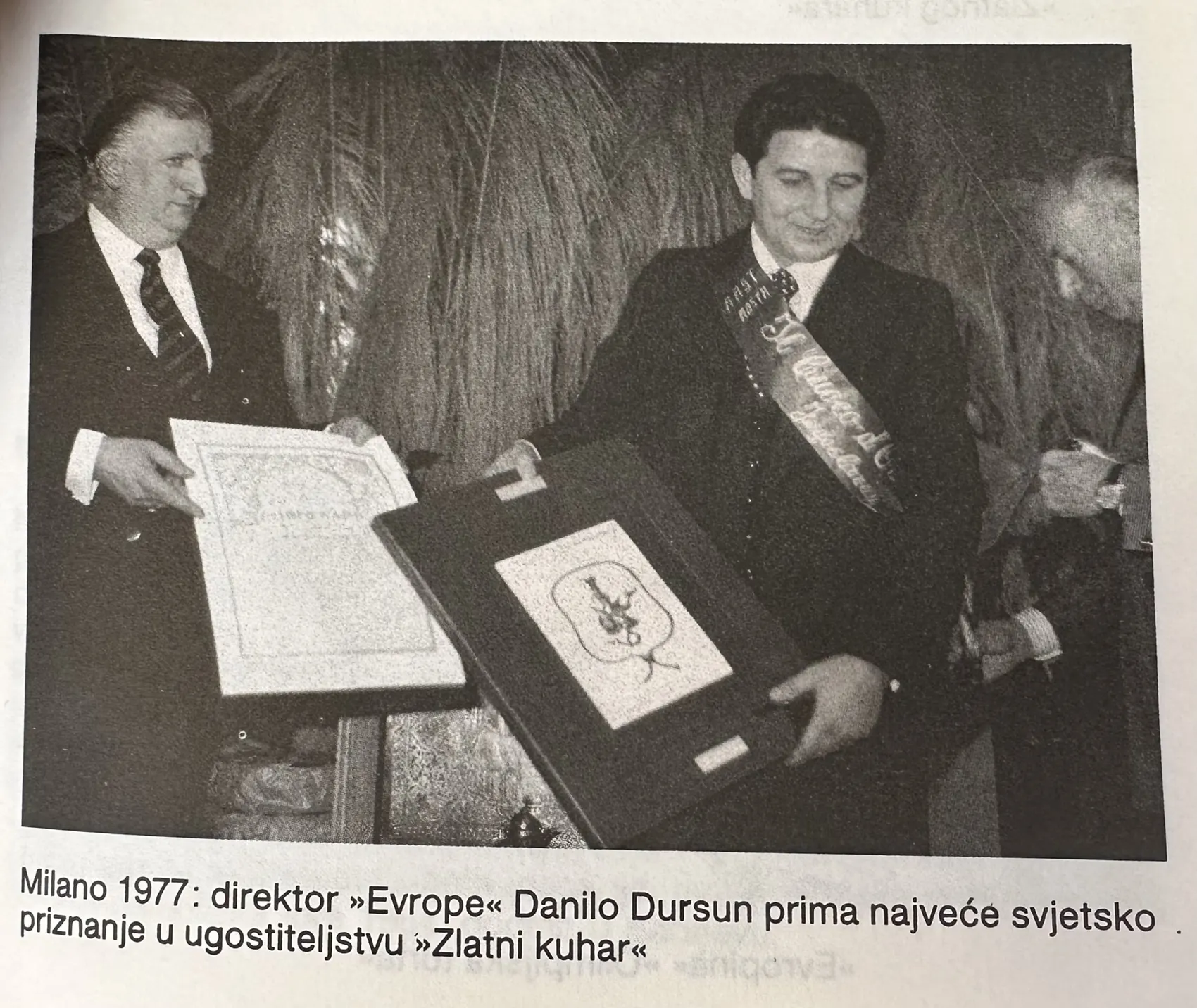
Kuhinja je imala svoje zvijezde. Prema hotelskoj hronici, kuhar Hasan Vilić osmislio je tortu „Evropa“ i za nju 1968. godine osvojio zlatnu medalju u Frankfurtu. Mnogo godina kasnije Udruženje kuhara BiH nagradilo ga je za doprinos očuvanju bosanskohercegovačke gastronomske tradicije.
The kitchen had stars of its own. The chef Hasan Vilić, honoured many years later by the Association of Chefs of Bosnia and Herzegovina for preserving the country’s culinary tradition, created the “Evropa” cake, according to the hotel chronicle, and won a gold medal with it in Frankfurt in 1968.
Šta pamte konobariWhat the waiters remember
Radoje Šutić radio je kao konobar u Evropi od 1974. do 1992. godine, a Miralem Turčalo počeo je raditi 1984. godine, u vrijeme sarajevskih Zimskih olimpijskih igara. Njihova sjećanja čuvaju i ono što nije zabilježeno u knjizi gostiju. Glumcima Miodragu Petroviću Čkalji i Jovi Radovanoviću uvijek su pakovali tufahije za put u Zagreb i Beograd. Košarkaš Josip Đerđa tufahije je zvao „fatime“. Zuko Džumhur dugo je sjedio sa suprugom u Bečkoj kafani. Akademik Muhamed Filipović petkom poslijepodne okupljao je društvo od dvadesetak ljudi, a sarajevski advokati dolazili su četvrtkom. Turčalo pamti i da je za vrijeme Igara u hotelu boravio Kirk Douglas, „čovjek s porocima, ali veliki gospodin“.
Radoje Šutić served at the Evropa from 1974 to 1992, and Miralem Turčalo started in 1984, the Olympic year. Their memories keep what no guest book recorded: that the actors Miodrag Petrović Čkalja and Jova Radovanović never left the hotel without tufahije, which were packed for the journey to Zagreb and Belgrade; that the basketball player Josip Đerđa called tufahije “fatimas”; that Zuko Džumhur would sit for hours with his wife in the Viennese Café; that the academician Muhamed Filipović gathered a party of some twenty people on Friday afternoons, while Sarajevo’s lawyers came on Thursdays. Turčalo also remembers Kirk Douglas staying at the hotel during the Olympics, “a man with vices, but a great gentleman”.
Savremena ilustracijaContemporary illustration
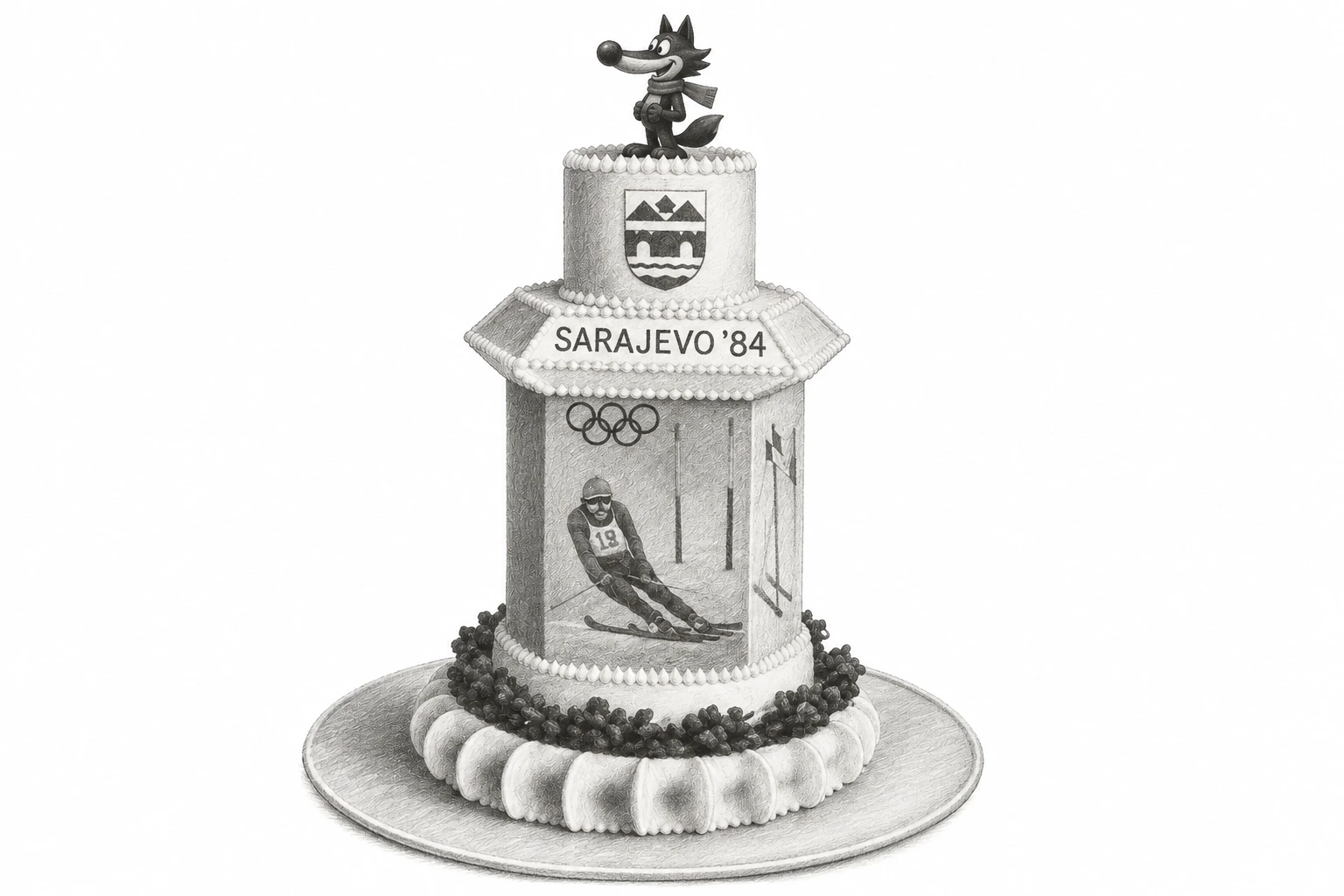
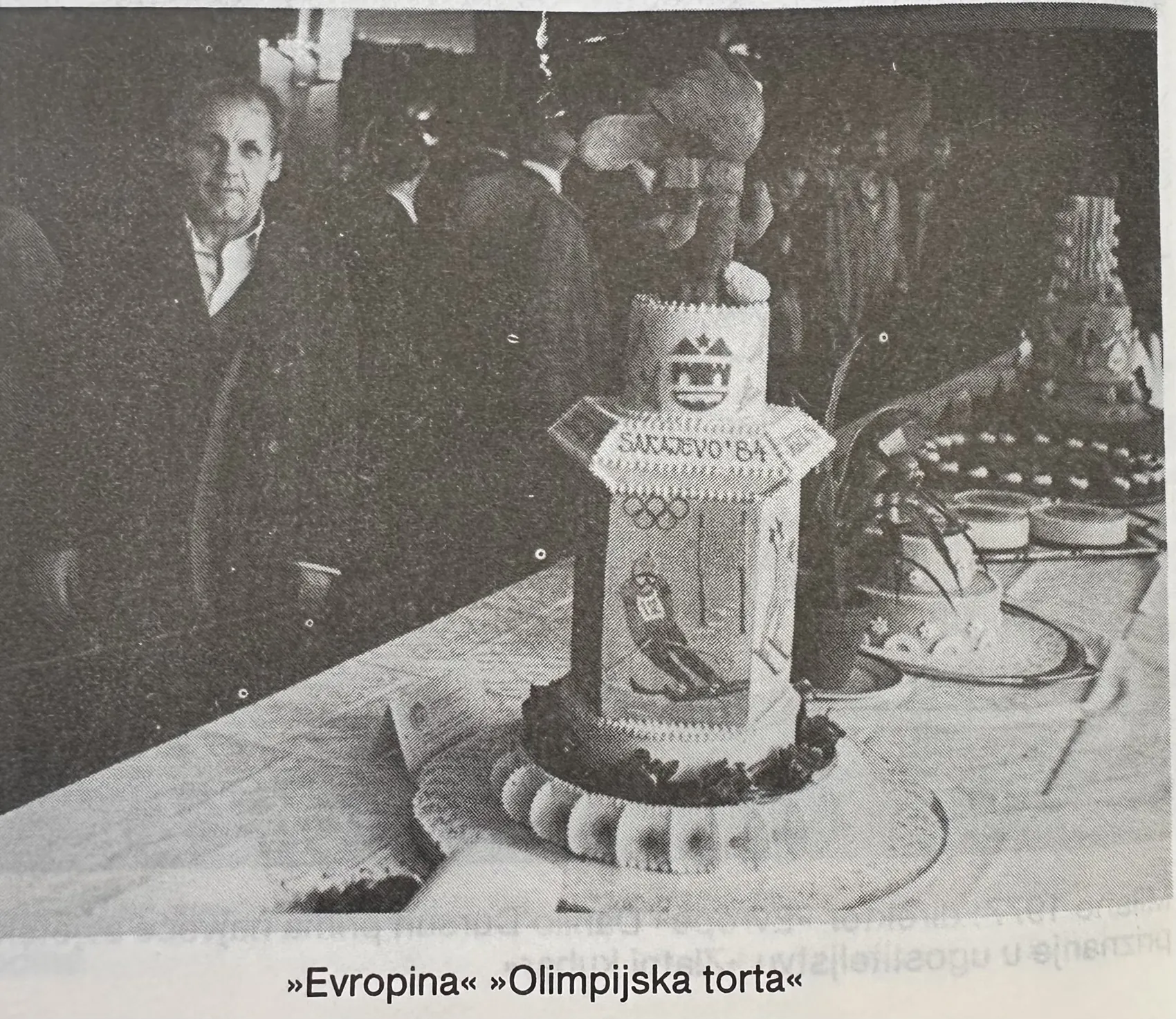
Olimpijska torta hotela EvropaThe Evropa’s Olympic cake