
Počeci i otvaranje hotelaOrigins and opening
Kuća gospara GlišeThe house of Gliša Jeftanović
1882
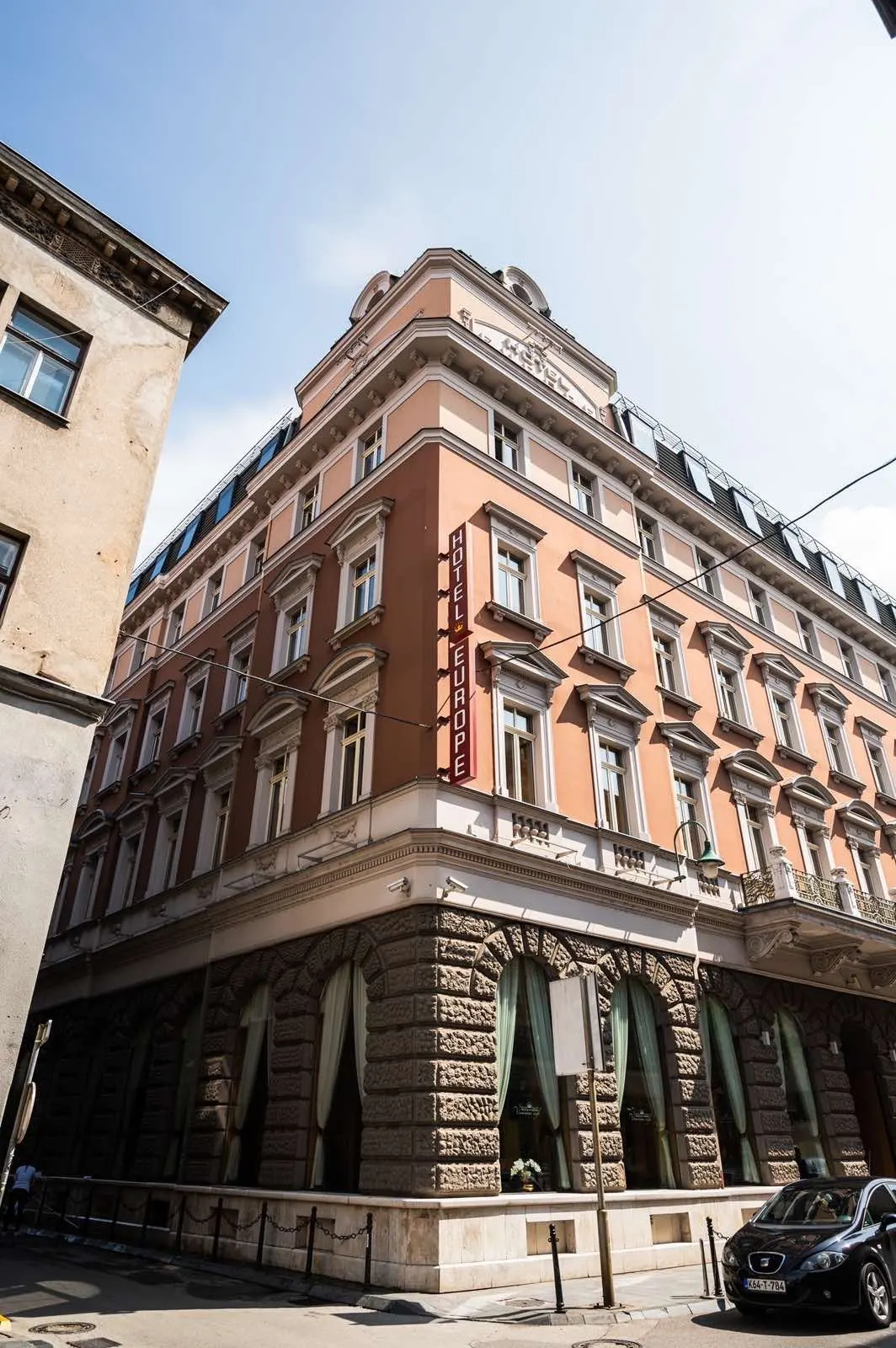
Fasada iz 1882. godine nakon obnove 2008.The 1882 façade, restored in 2008
Kada je pisao o Gliši Jeftanoviću, zvanični list istaknuo je njegovo bogatstvo. Dio tog imetka sarajevski je trgovac uložio u gradnju hotela.The official gazette remarked on Gliša Jeftanović’s wealth. The Sarajevo merchant invested part of his fortune in building the hotel.
Gligorije Gliša Jeftanović rođen je 1841. godine u staroj trgovačkoj porodici. Jeftanovići su se u osamnaestom stoljeću doselili iz Hercegovine u Sarajevo i s vremenom stekli ugled jedne od vodećih trgovačkih porodica u gradu. Pod austrougarskom upravom Gliša je postao najbogatiji i najuticajniji Srbin u Bosni i Hercegovini: snabdijevao je vojsku i uz Vojislava Šolu bio jedan od vođa srpskog pokreta za crkvenu i školsku autonomiju.
Gligorije “Gliša” Jeftanović was born in 1841 into an old merchant family that had come to Sarajevo from Herzegovina in the eighteenth century and gradually risen among the city’s leading trading houses. Under Austro-Hungarian rule he became the wealthiest and most influential Serb in Bosnia and Herzegovina: he supplied the army and was, with Vojislav Šola, one of the leaders of the Serbian movement for church and school autonomy.
Hotel je bio njegovo najvidljivije djelo. Hotel je svečano otvoren u utorak, 12. decembra 1882. godine. Jeftanović ga je odmah dao u zakup Eduardu Lasslaueru. Ulica uz hotel dobila je ime po vlasnikovoj porodici. Kao Jeftanovića ulica spominjala se u oglasima i ostala u sjećanju Sarajlija.
The hotel was his most visible work. The building formally opened on Tuesday, 12 December 1882, and Jeftanović immediately leased it to Eduard Lasslauer. The street beside the hotel took the name of the owner’s family, Jeftanović Street, and under that name it lived on in advertisements and in the memory of Sarajevans.
O odnosu vlasnika i zakupca svjedoči i pismo iz 1908. godine. Travnički advokat Akif ef. Biserović javno je opovrgao priču da su muslimanski gosti napustili hotel zbog uvrede. Prema Biseroviću, gosti su se s mladim portirom sporili oko sobe. Smatrao je da vlasnik Jeftanović i zakupac nisu odgovorni za taj nesporazum.
The relationship between owner and leaseholder can be seen in a letter of 1908. A lawyer from Travnik, Akif ef. Biserović, publicly denied a story that Muslim guests had left the hotel over an insult. Biserović explained that the guests and a young porter had disagreed over a room. In his view, the owner, Jeftanović, and the leaseholder bore no responsibility for the dispute.
Ime porodice vezivalo se za hotel i u službenim dokumentima. Kada su 1923. godine stambene vlasti imenovale sarajevske kućevlasnike za zastupnike u stambenim sporovima, uz Jeftanovićevo prezime na spisku naveden je hotel Evropa.
The family name stayed with the hotel on paper too: as late as 1923, when the housing authority appointed Sarajevo house-owners to represent others in housing disputes, the list gave the Hotel Evropa alongside Jeftanović’s name.
Početkom dvadesetog stoljeća ostarjeli Gliša prepustio je veliki dio poslova, uključujući i hotel, sinu Dušanu, doktoru prava, rođenom 1884. Otac je umro 1927. godine.
In the early twentieth century the ageing Gliša handed over much of his business, the hotel included, to his son Dušan, a doctor of law born in 1884. The father died in 1927.
Fasada za novo dobaA façade for a new age
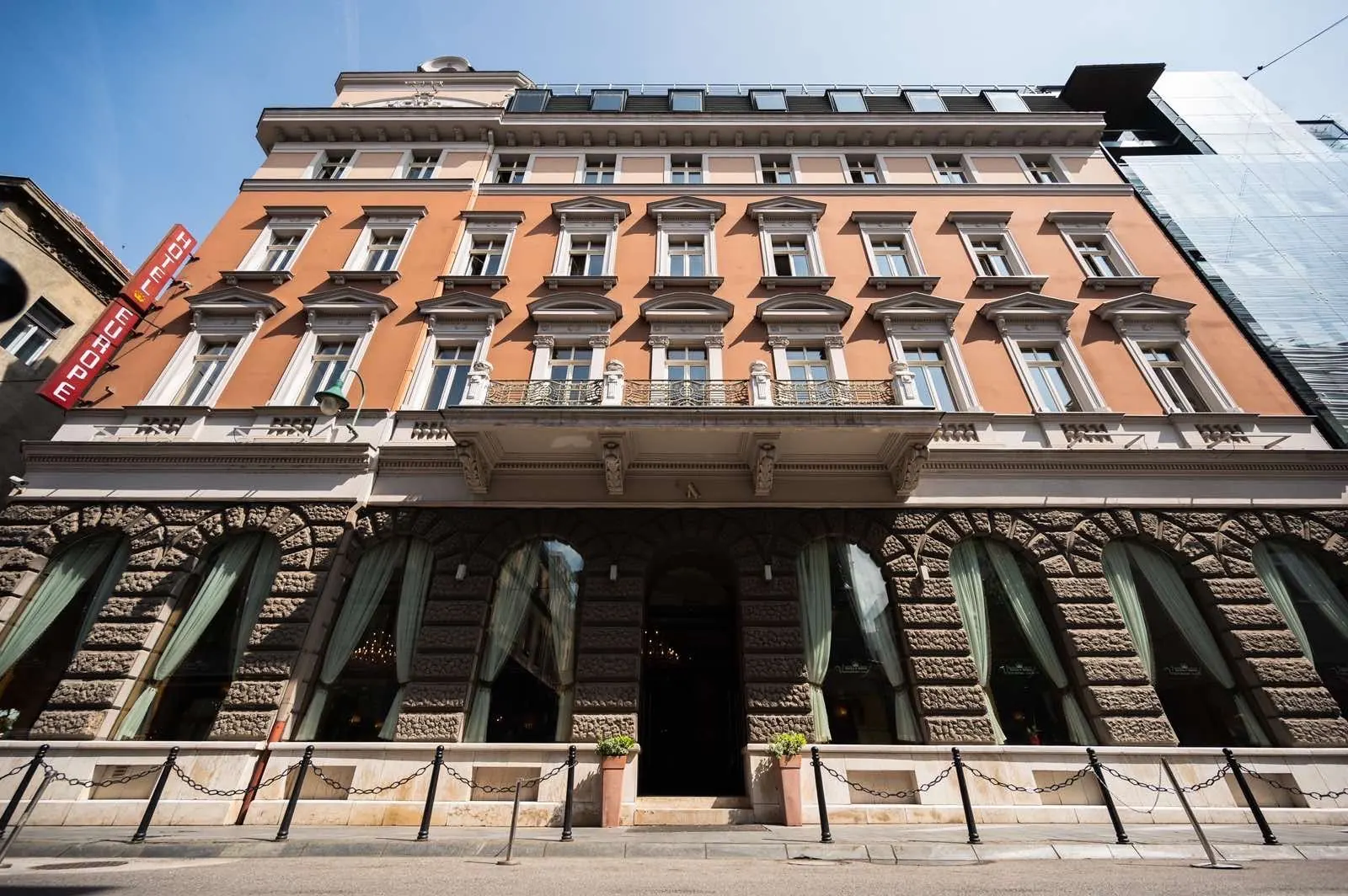
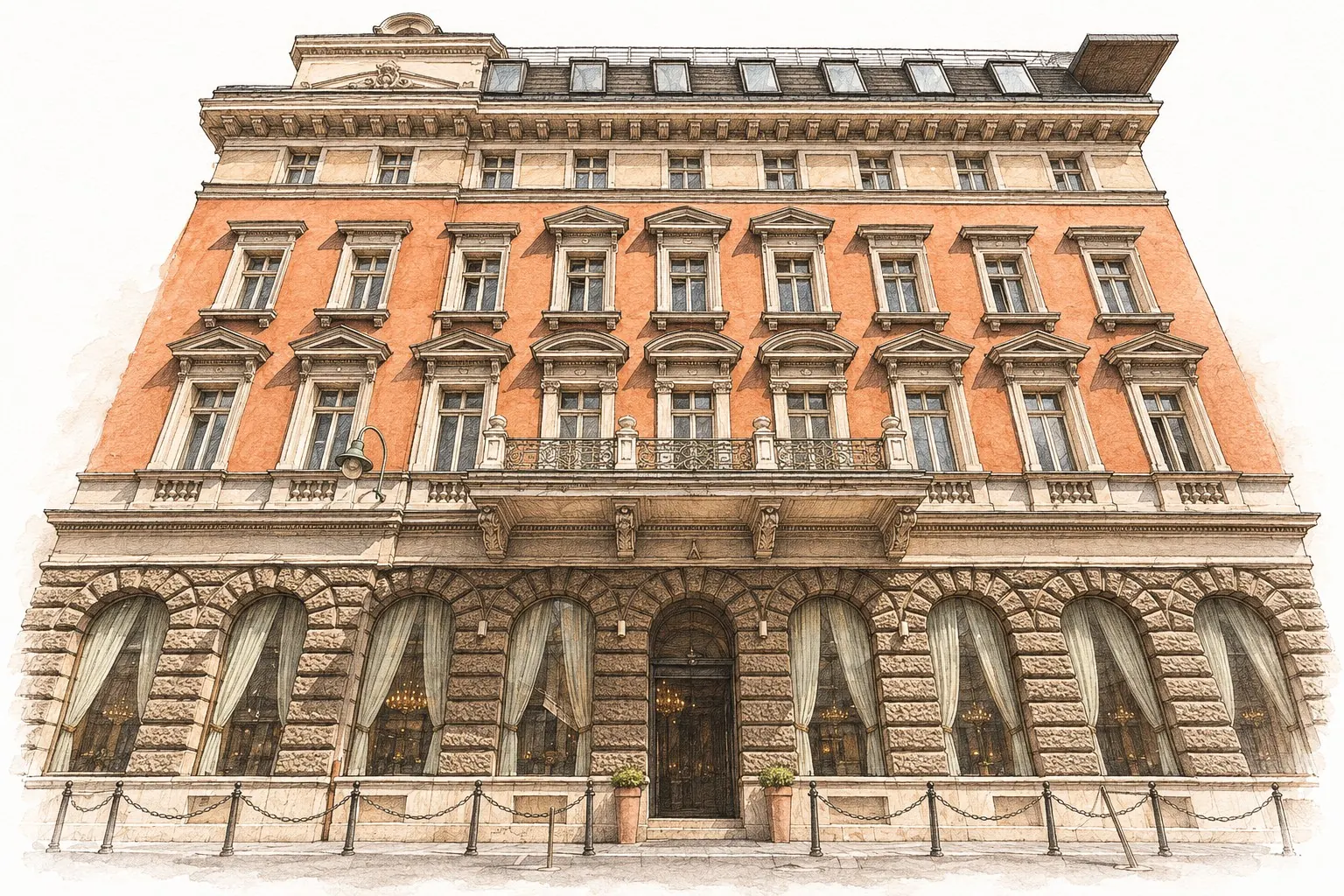
Evropa je građena u neorenesansnom duhu historicizma, s elementima secesije. U prizemlju se nižu masivni kameni lukovi grubo obrađene površine. Iznad njih su pravilni nizovi prozora s profiliranim okvirima, a na uglu je balkon s kovanom ogradom. Za Sarajevo osamdesetih godina devetnaestog stoljeća bilo je to nešto posve novo: zgrada koja je izgledala kao da je prenesena iz Beča ili Praga.
The Evropa was built in the neo-Renaissance spirit of historicism, with Secession details. Heavy rusticated stone arches line the ground floor, above them run calm rows of windows with moulded frames, and on the corner sits a balcony with a wrought-iron railing. For the Sarajevo of the 1880s this was something entirely new: a building that looked as though it had been carried over from Vienna or Prague.
Gosti i Sarajlije susretali su se u Bečkoj kafani, restoranu i Zimskoj bašti, a ljeti i u bašti ispred hotela. Hotel je postao ono što su njegovi graditelji i željeli: dnevni boravak novog Sarajeva.
Guests and Sarajevans met in the Viennese Café, the restaurant and the Winter Garden, and in summer in the garden outside. The hotel became what its builders had intended: the living room of the new Sarajevo.
Tabla IIPlate II
PročeljeThe façade
Graditelj SarajevaThe builder of Sarajevo
Već se u prvim nekrolozima ime Karela Paříka povezivalo s Evropom. Rođen je u julu 1857. u Velišu kod Jičína u Češkoj, a građevinsku školu završio je u Beču. Prvi dokument o njegovom radu u Sarajevu potječe iz marta 1884. godine. U gradu je ostao pedeset osam godina. Istraživači su dokumentirali više od stotinu njegovih projekata, od Šerijatske sudačke škole i Zemaljskog muzeja do Aškenaske sinagoge, Narodnog pozorišta i Crkve svetog Josipa u sarajevskom naselju Marijin Dvor.
Karel Pařík’s name has been linked to the Evropa since the first obituaries. Born in July 1857 in Veliš near Jičín, in Bohemia, he completed a building school in Vienna, and the first record of his work in Sarajevo dates from March 1884. He stayed for fifty-eight years. Scholars have documented more than a hundred of his projects, from the Sharia Judges’ School and the National Museum to the Ashkenazi Synagogue, the National Theatre and the church of St Joseph at Marijin Dvor.
Sudeći prema tim datumima, malo je vjerovatno da je Pařík, koji je 1881. i 1882. još bio u Beču, projektovao prvobitnu zgradu. Istraživači ipak pretpostavljaju da je učestvovao u kasnijim preuređenjima hotela. Ime prvog projektanta Evrope tako je ostalo jedna od malih zagonetki ove kuće.
Judging by these dates, it is unlikely that Pařík, still in Vienna in 1881 and 1882, designed the original building. Recent research nonetheless suggests that he took part in its later alterations. The name of the Evropa’s first designer thus remains one of the house’s small mysteries.
„Ovdje počiva graditelj Sarajeva. Čeh po rođenju, Sarajlija po izboru.“
“Here rests the builder of Sarajevo. Czech by birth, Sarajevan by choice.”
Natpis na grobu Karela Paříka u SarajevuInscription on Karel Pařík’s grave in Sarajevo
Umro je u Sarajevu 16. juna 1942. Teško je zamisliti bolji opis i za kuću s kojom se njegovo ime toliko dugo spominje: evropska po rođenju, sarajevska po izboru.
He died in Sarajevo on 16 June 1942. It is hard to imagine a better description of the house with which his name has so long been linked: European by birth, Sarajevan by choice.