
Grad i njegovi gostiThe city and its guests
Lift, autobus i treći spratA lift, a bus and a third floor
1910–1914
Nova uprava htjela je da Evropa može primiti goste po uzoru na vodeće međunarodne hotele. Jedna od prvih novina bio je prijevoz sa željezničke stanice motornim omnibusom.The new management wanted the Evropa to match leading hotels abroad. One of the first changes guests saw was a motor bus at the railway station.
Čim je u julu 1910. preuzela hotel, nova uprava objavila je da je preuređenje već počelo. Najavila je dogradnju trećeg sprata, ugradnju lifta i uvođenje električnog omnibusa.
As soon as it took over in July 1910, the new management announced that alterations were under way and that a third floor would soon be added, a lift installed and an electric bus put into service.
Prvi autobus u SarajevuSarajevo’s first bus
Željeznička stanica bila je daleko od centra grada. Još od devedesetih godina devetnaestog stoljeća goste su odatle dovozili hotelski omnibusi koje su vukli konji. U aprilu 1911. hotel je uveo motorni omnibus za prijevoz gostiju između stanice i hotela. Prema pisanju lista Sarajevoer Tagblatt od 20. aprila 1911, bio je to prvi sarajevski autobus. Prvi putnici bili su članovi Udruženja inostrane štampe iz Beča, među njima i pisac Alfred H. Fried, koji je iste godine dobio Nobelovu nagradu za mir.
The railway station lay far from the centre, and since the 1890s guests had been fetched by the hotel’s horse-drawn omnibuses. In April 1911 the hotel introduced a motor omnibus to bring guests from the station and take them back. On 20 April 1911 the Sarajevoer Tagblatt reported that this was Sarajevo’s first bus. Its first passengers were members of the Foreign Press Association from Vienna, among them the writer Alfred H. Fried, who would receive the Nobel Peace Prize that same year.
List Bosnische Post već je 10. aprila 1911. pisao o hotelskom prijevozu gostiju s udaljene željezničke stanice.
The Bosnische Post had reported on the hotel’s bus service from the outlying railway station on 10 April 1911.
Lift iz bajkeA fairy-tale lift
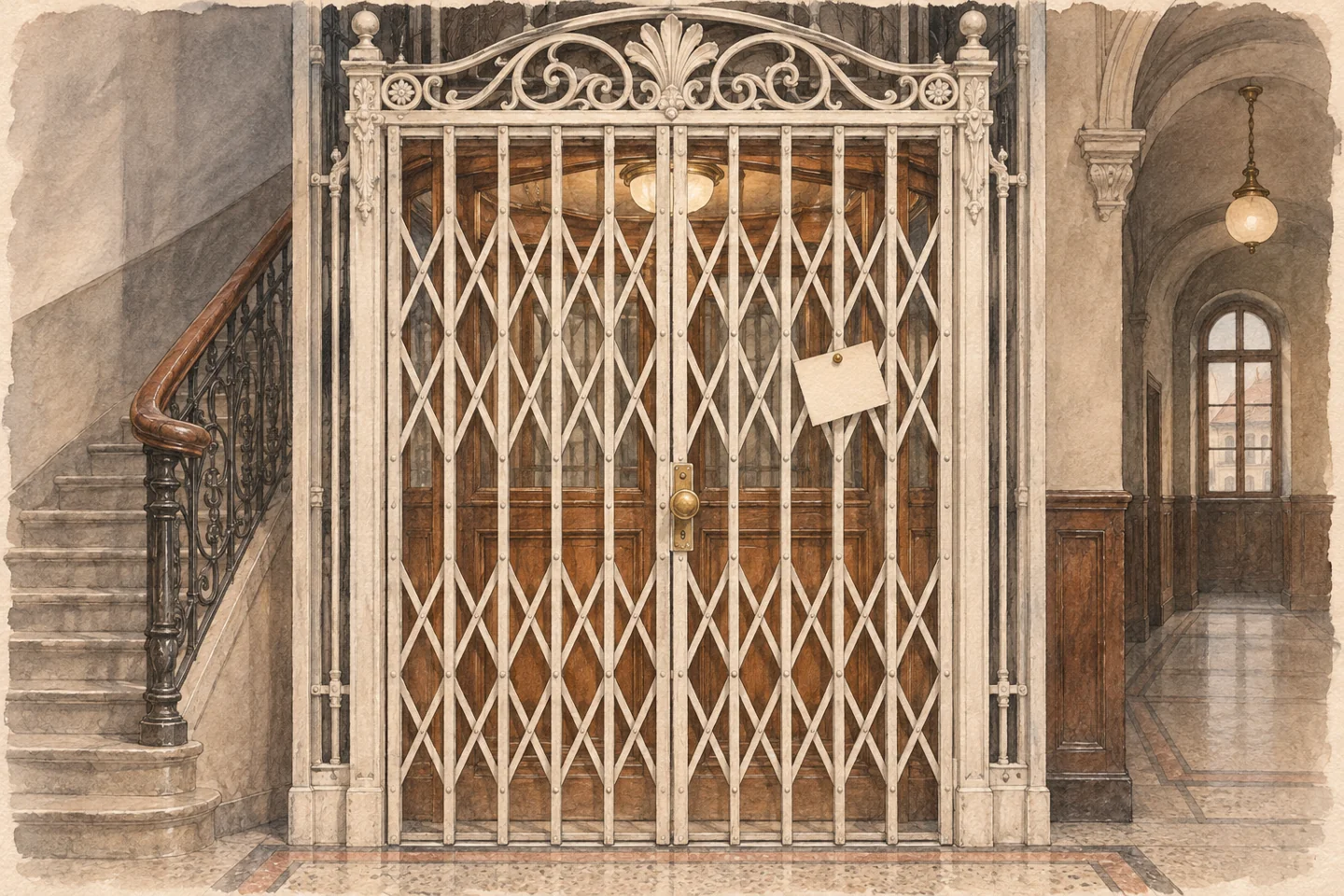
Za vrijeme boravka nadvojvode Leopolda Salvatora hotelski lift već je nekoliko mjeseci bio spreman za upotrebu. Na bijelim rešetkastim vratima ipak je stajala obavijest da lift ne radi i da je ulaz zabranjen. Kako je u julu 1912. zabilježio list Bosnische Post, čekao se službeni pregled. Do tada se liftom nisu mogli voziti ni nadvojvoda ni drugi gosti.
By the time Archduke Leopold Salvator stayed at the hotel, the new lift had been ready for several months. A notice on its white lattice gate still warned that the lift was out of service and entry was forbidden. In July 1912 the Bosnische Post reported that the lift was awaiting its official inspection. Until then, neither the archduke nor the other guests could use it.
Ljudi iz hotelaThe people behind the hotel
Novine bilježe i imena onih koji su vodili hotel i onih koji su u njemu radili. Direktor Mader otišao je u decembru 1910. Bivši direktor L. Felkelt preuzeo je 1912. godine restoran Društvenog doma. Godine 1913. vlasnik hotela bio je dr. Dušan Jeftanović, a direktor Georg Streicher. Novine su 1911. godine zabilježile i zgodu s portirom Muzom. Usred noći odbio je čovjeka koji se predstavio kao umjetnik koji je za sebe i dvojicu prijatelja tražio besplatan smještaj. Kad nisu htjeli otići, Muza je iz kancelarije mirno pozvao policiju.
The newspapers also record the names of those who ran the hotel and those who worked there. Director Mader left in December 1910. Former director L. Felkelt took over the restaurant of the Društveni dom in 1912. In 1913 the owner was Dr Dušan Jeftanović and the director Georg Streicher. The porter Muza, a report of 1911 tells us, turned away in the dead of night a man who introduced himself as an artist who wanted free lodging for himself and two friends, and when the strangers would not leave, calmly telephoned the police from the office.
Bivši šef konobara Pista Mezö bio je rodom iz okoline Kečkemeta. Zanat je izučio u Budimpešti, a u Sarajevo je došao na Lasslauerov poziv. U februaru 1912. izložio je svoju nagrađenu zbirku jelovnika i pokazivao sarajevskim damama kako se prema tadašnjoj modi postavlja sto za dvanaest osoba. Prihod je dao Dobrovoljnom društvu za spašavanje, koje se tada osnivalo. Do smrti 1967. godine prikupio je više od četiri hiljade jelovnika i ostavio ih Gradu Sarajevu. U hotelskoj kafani Sarajlije su mogle upoznati i tehničke novitete. Kad je u oktobru 1912. nestalo struje, dio kafane osvijetljen je novom bečkom petrolejskom lampom jačine 180 svijeća. Šampanjac Charles Heidsieck iz Reimsa mogao se kupiti u svega nekoliko sarajevskih radnji i u samom hotelu.
In February 1912 the former head waiter Pista Mezö, born near Kecskemét, trained in Budapest and brought to Sarajevo at Lasslauer’s invitation, exhibited his prize-winning collection of menus and showed the ladies of Sarajevo how to lay a modern table for twelve. He gave the proceeds to the Voluntary Rescue Society, then being founded. By his death in 1967 he had gathered over four thousand menus and left them to the City of Sarajevo. The hotel was also a showcase for novelties: when the power failed in October 1912, part of the café was lit by a new Viennese paraffin lamp of 180 candlepower, and Charles Heidsieck champagne from Reims could be bought in only a handful of Sarajevo shops and at the Hotel Europe.
U velikoj sali lijevo od predvorja u martu 1911. budimpeštanski trgovac umjetninama Ernst Fränkel otvorio je izložbu radova mađarskih slikara u tehnikama ulja i pastela. Pred odlazak je osamdeset slika ponudio ispod nabavne cijene. Istog ljeta hotel je oglasom nudio tri bilijarska stola sa svim priborom za igru.
In March 1911, in the great hall to the left of the lobby, the Budapest art dealer Ernst Fränkel opened an exhibition of oils and pastels by Hungarian painters, and before leaving he offered eighty paintings for sale below cost. That summer the hotel advertised three billiard tables with all the equipment needed to play for sale.
U podlistku od 9. oktobra 1913. Sarajevoer Tagblatt objavio je zapažanja putnice koja je dva dana boravila u Sarajevu. U opisu hotela istaknula je njegov evropski karakter.
On 9 October 1913 the Sarajevoer Tagblatt published a visitor’s account of two days in Sarajevo. She remarked on the hotel’s European character.